The Japanese Language
The Japanese language, is a language isolate (i.e., a language unrelated to any other language) and one of the world’s major languages, with more than 127 million speakers in the early 21st century. It is primarily spoken throughout the Japanese archipelago; there are also some 1.5 million Japanese immigrants and their descendants living abroad, mainly in North and South America, who have varying degrees of proficiency in Japanese. Since the mid-20th century, no nation other than Japan has used Japanese as a first or a second language.
The Japanese Writing System
The Japanese alphabet is really three writing systems that work together. These three systems are called hiragana, katakana and kanji.
Romaji isn’t one of the Japanese writing systems. It’s the Roman alphabetization of the Japanese language. It can be helpful in some situations, though romaji isn’t a reliable substitute for hiragana, katakana or kanji .
Hiragana and Katakana
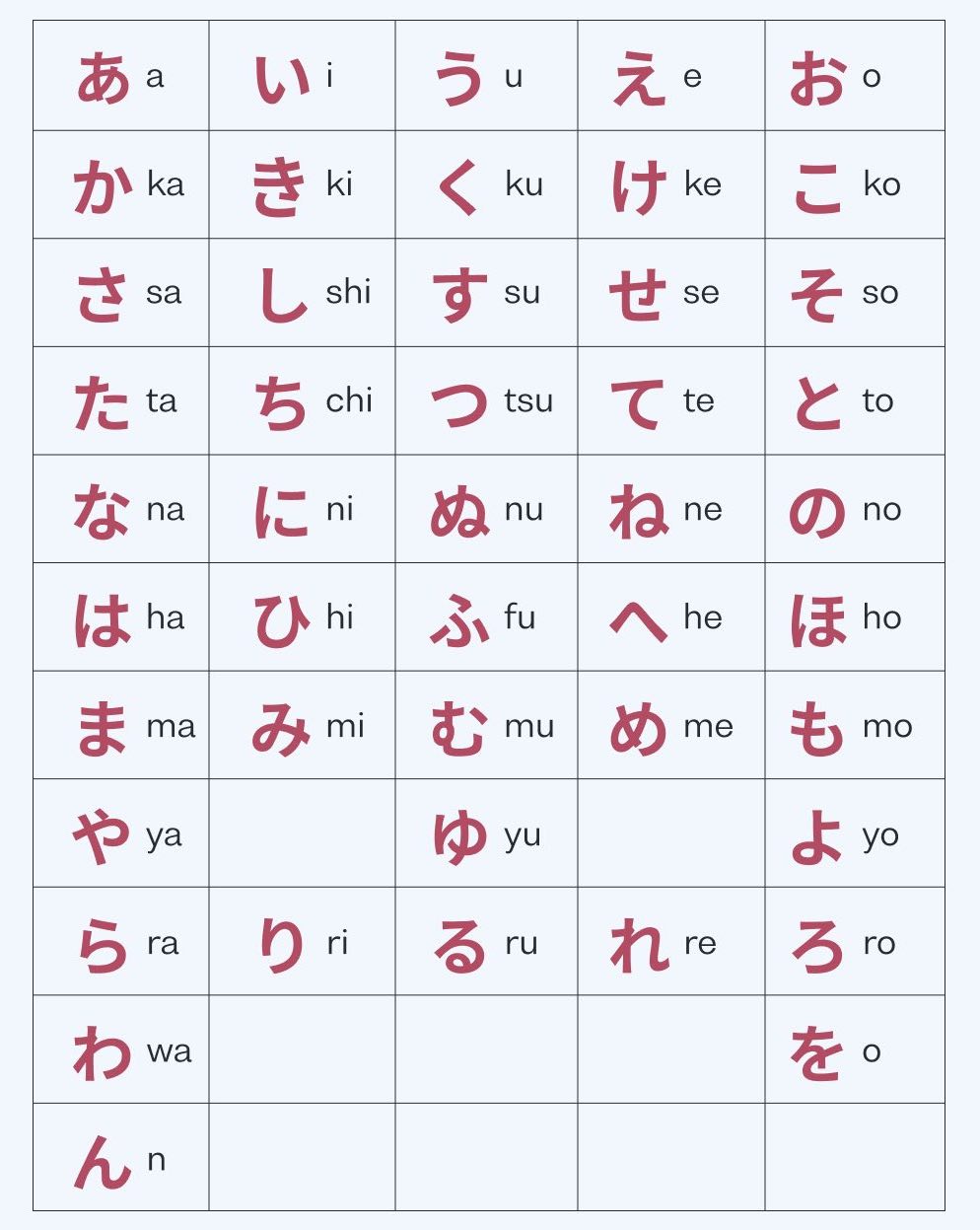
Hiragana and katakana are two different ways to write the same set of 46 sounds. They’re the closest the Japanese language has to an alphabet. The primary difference between this kind of writing system – technically a ‘syllabary’ – and not an ‘alphabet’: Characters generally represent a whole sound (like ‘ki’ or ‘ra’), rather than individual letters (like ‘k’ or ‘r’).
Usually, we write native Japanese words using hiragana, while katakana is used for words borrowed from other languages.
So, for example, arigatou, Japanese for “thank you”, is typically written ありがとう (a ri ga to u) using hiragana characters, whereas “America” is written アメリカ (a me ri ka) using katakana.
Hiragana
Hiragana emerged as a manual simplification via cursive script of the most phonetically widespread kanji among those who could read and write during the Heian period (794–1185). The main creators of the current hiragana were ladies of the Japanese imperial court, who used the script in the writing of personal communications and literature.
Hiragana characters represent the 46 primary sounds used in Japanese, and are usually used to write words that are originally Japanese.
Katakana
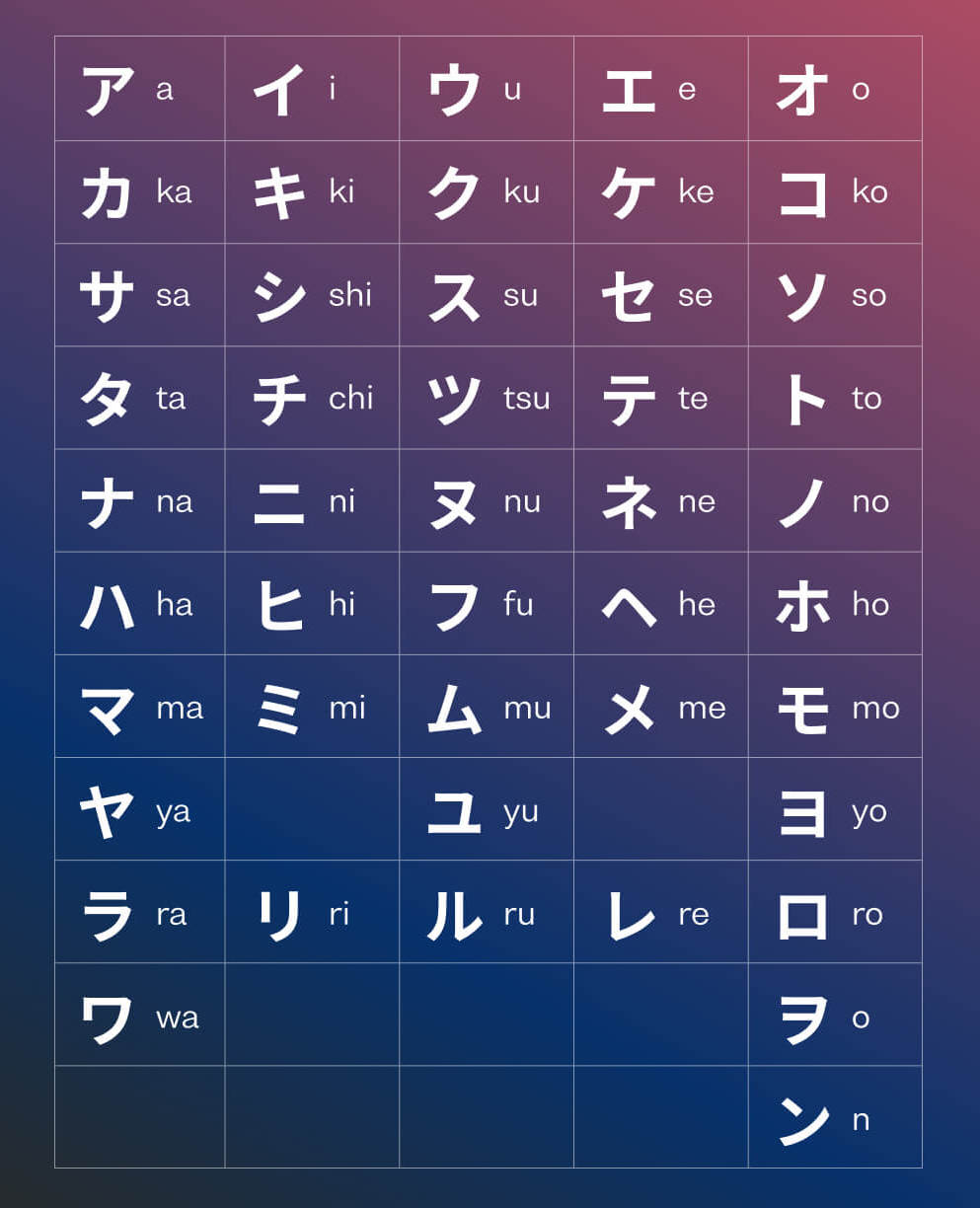
Katakana emerged around the 9th century, in the Heianperiod, when Buddhist monks created a syllabary derived from Chinese characters to simplify their reading, using portions of the characters as a kind of shorthand.
Conveniently, the katakana character set covers the same sounds as hiragana. Some of the characters even look a bit similar, like ‘mo’ – も and モ – and ‘ya’ – や and ヤ.
Kanji
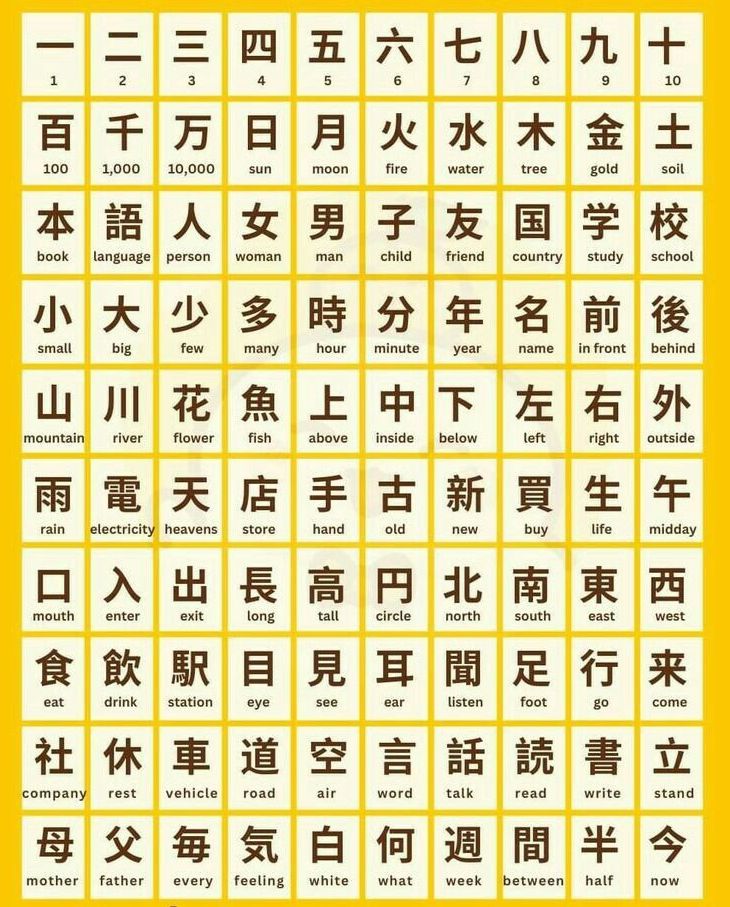
Kanji are logographic characters (Japanese-simplified since 1946) taken from Chinese script and used in the writing of Japanese.
It is known from archaeological evidence that the first contacts that the Japanese had with Chinese writing took place in the 1st century AD, during the late Yayoi period. However, the Japanese people of that era probably had little to no comprehension of the script, and they would remain relatively illiterate until the 5th century AD in the Kofun period, when writing in Japan became more widespread.
Unlike katakana and hiragana, kanji aren’t always characters you put together to make sounds and words. Kanji are symbols that mean a whole word or idea. Many of them were borrowed from Chinese characters at different times over the past several centuries.
Several thousand kanji characters are in regular use, which mostly originate from traditional Chinese characters. Others made in Japan are referred to as “Japanese kanji”. Each character has an intrinsic meaning (or range of meanings), and most have more than one pronunciation, the choice of which depends on context.
Japanese primary and secondary school students are required to learn 2,136 jōyō kanji (“regular-use kanji”) as of 2010. The total number of kanji is well over 50,000, though this includes tens of thousands of characters only present in historical writings and never used in modern Japanese.