
Bowing in Japan
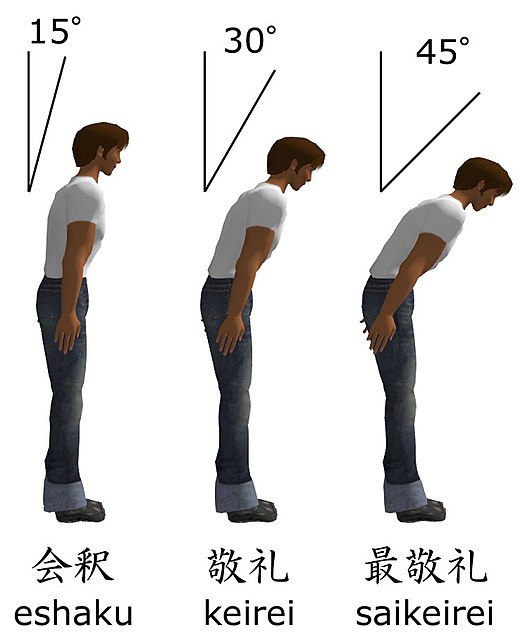
Unlike in western culture, bowing in Japan, known as ojigi, is an important etiquette that is learned from a young age. Depending on the situation, a bow can be a small nod of the head or a deep bend at the waist. A deep, long bow indicates respect, and a smaller nod is usually less formal. Bowing in Japan can be used to signify emotions, including appreciation, respect, remorse or gratitude.
Bowing is generally split into two different types, kneeling (zarei) and standing (ritsurei). For both of these styles, you must remember to only bend your body at the waist and keep your back straight throughout.
Knowing how to bow properly in Japan is considered a defining quality of adulthood. Bowing in Japanese culture is so ingrained that people will often bow when speaking on the phone, even if they are aware the other person can’t see them. Even though most Japanese people learn the correct technique from a young age, it is not uncommon for Japanese companies to take extra effort to train their employees how to bow in business settings. If you’re thinking of visiting or working in Japan, it’ll put you in good stead to learn a good bowing technique and etiquette. Don’t worry about getting it wrong though. Most Japanese people will not expect foreigners to know proper bowing rules, and they’ll probably let you off… probably.
Why Do People Bow In Japan
Bowing in Japan is important in business and social settings. Bowing incorrectly can derail business deals, make you look incompetent or create awkward situations that lead to a loss of face.
Situations Where People Bow In Japan
Bowing in Japan isn’t just a means of saying hello. It is also common to bow in other social interactions such as:
- Greeting someone
- Saying goodbye
- At the start or end of a meeting, class or ceremony
- Expressing your gratitude (saying thanks)
- Apologising
- Congratulating someone
- Asking for something
- Worshipping someone or something
- To show sympathy
- To show appreciation
- To initiate a formal ceremony
- Upon entry or when leaving a martial arts dojo
Where Does Bowing Come From?
There is no definitive answer as to why bowing became a thing in Japan. However, it is believed that it came to Japan with Buddhism between the 5th and 8th centuries. Bowing is an important gesture of piety and respect in Buddhism. The warrior class, or samurai, were some of the most respected people in Japanese society for a long time. Samurai largely followed the disciplined virtues of Zen Buddhism and made them popular in Japan.
Bowing Vs Shaking Hands
Sometimes, during first time interactions, such as business meetings, Japanese people will offer to shake hands instead of bowing. Sometimes, you will find that both shaking hands and bowing take place, as each culture wants to respect the other. If you are in Japan and you aren’t sure, you should wait until someone else moves first and copy them. In general, handshakes in Japan are rare. Shaking hands in Japan is more significant than it is in the west. It symbolizes things like strong relationships, large deal signings and high profile mergers.
On another note, Japanese culture is not very “touchy-feely”. For this reason, hugging and high-fiving are not normal things to do in a work environment and should be avoided unless totally appropriate.