COVID and Hospital

  • Post author:

I woke up, and must have been confused, because I saw the time was around 5 o'clock, and I thought it was morning. I thought that I had to pack to leave for New Zealand, so I did most of my packing, but then fell again, unable to get up. This time, I called Matt, our tour director, and he caused a couple of paramedics to come. They got me into a sitting position, and then took me down to an ambulance and whisked me off to a hospital. In the ambulance, outside the Emergency Department, they tested me for COVID, and it came back positive (as all of us had suspected). Then, they moved me into the Emergency Department, into an isolation room, where they tested me again (positive again), inserted a cannula into my left arm to receive liquids of various kinds, and they told me that they were administering an electrolyte solution. While I could conduct a conversation, I was clearly not fully aware. I was having more trouble than usual finding words. Later, my doctor verified that I was suffering from severe dehydration due to COVID. It turned out that it was not 5:00am in the morning of March 27, as I had thought, but 5:00pm in the evening of March 26. I didn't learn that until days later. In that isolation room, they administered a number of things, including an x-ray, and I'm pretty sure an ECG (the first of many!). Probably other things, but I don't remember the details. I spent the night in that ED isolation room.
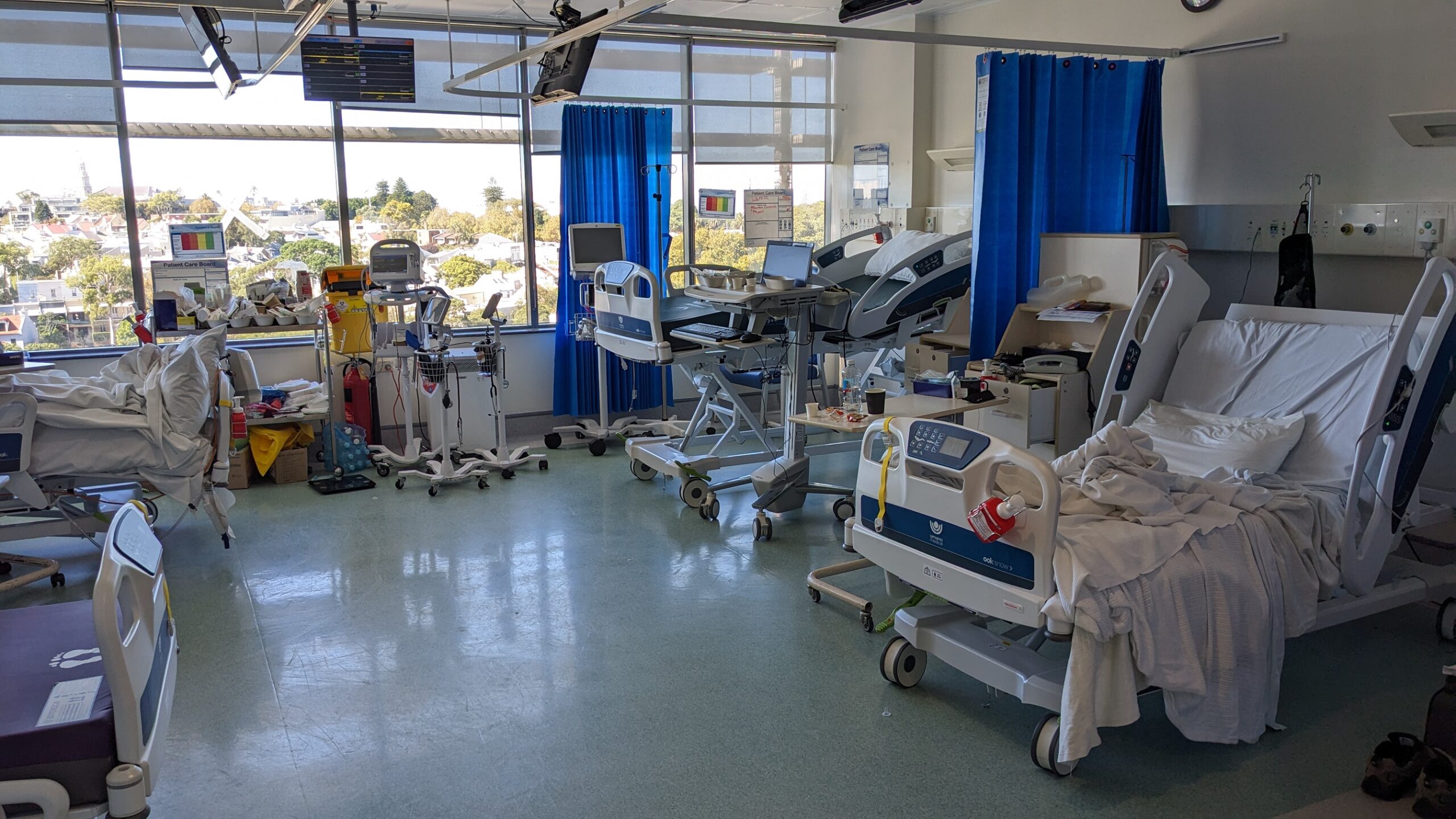
Another Isolation Room

  • Post author:

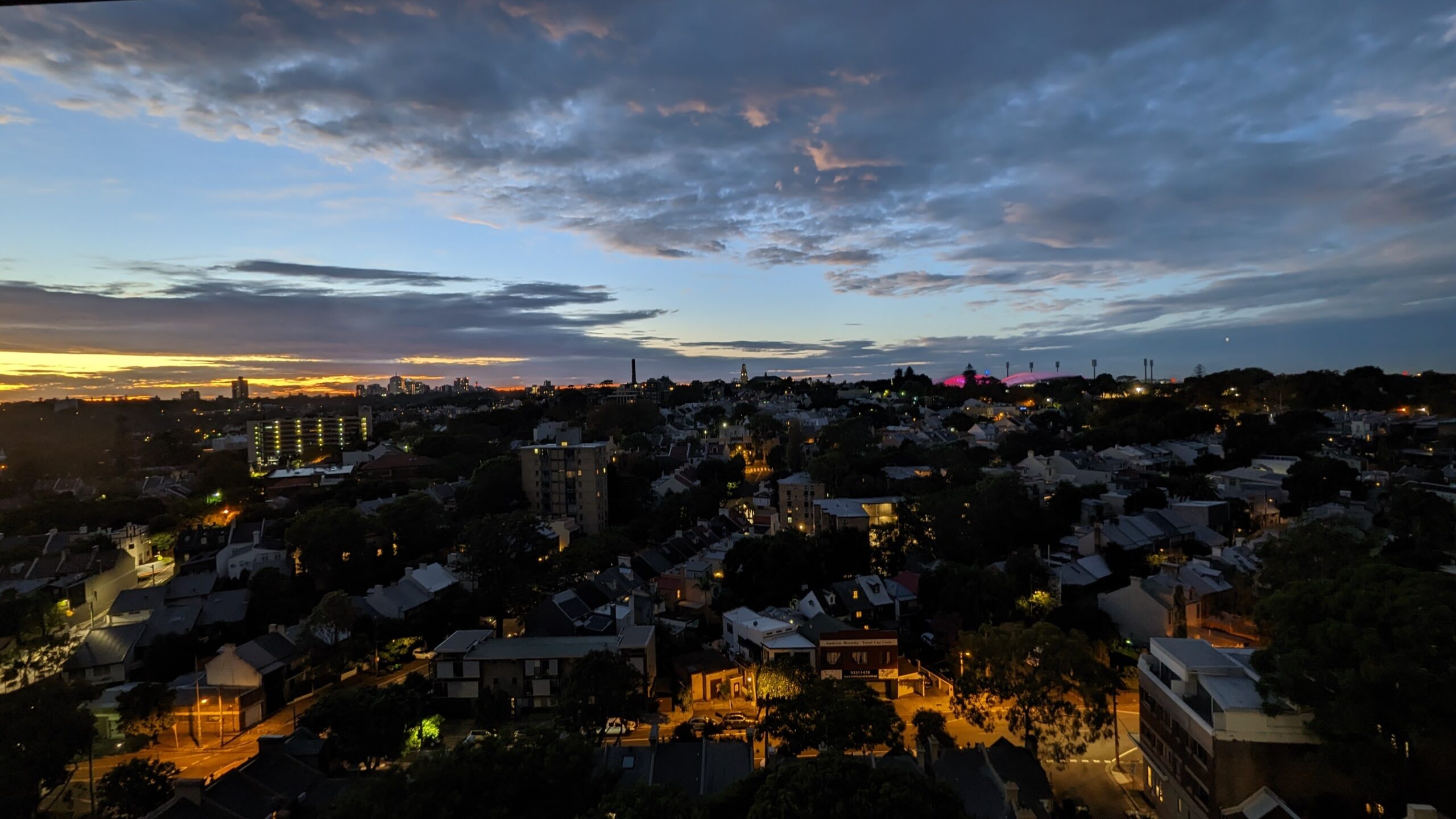
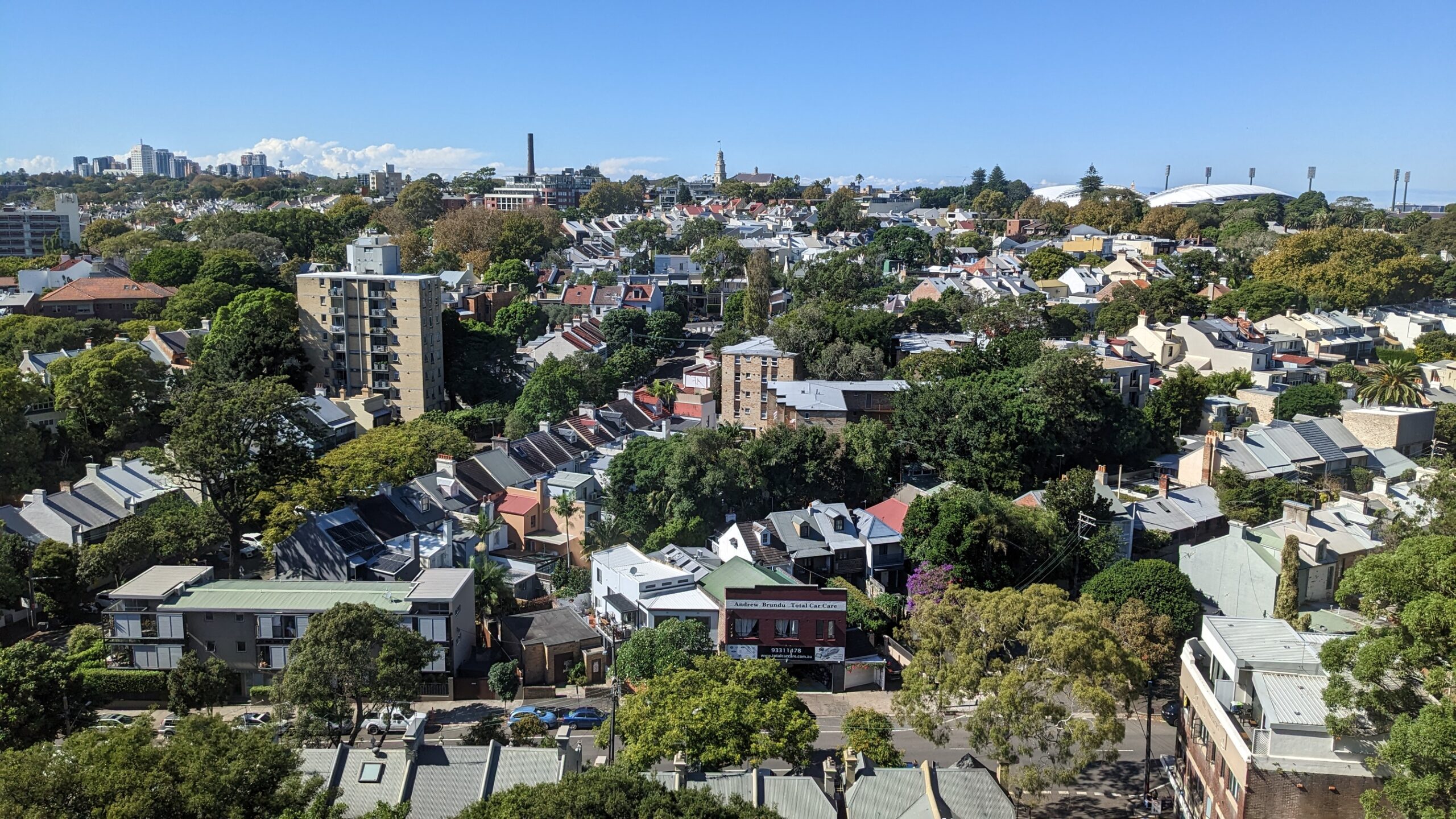
In the morning, they moved me upstairs to another single isolation room, in the Cardiac ward, as I found out later. This one had a view -- of an area of Sydney called Darlinghurst, as I also found out later. The staff were very attentive, and I received lots of treatment and they fed me -- the food was very good -- but I don't remember much of that day. I believe I slept that night in the single isolation room.

A 4-bed Isolation Ward

  • Post author:

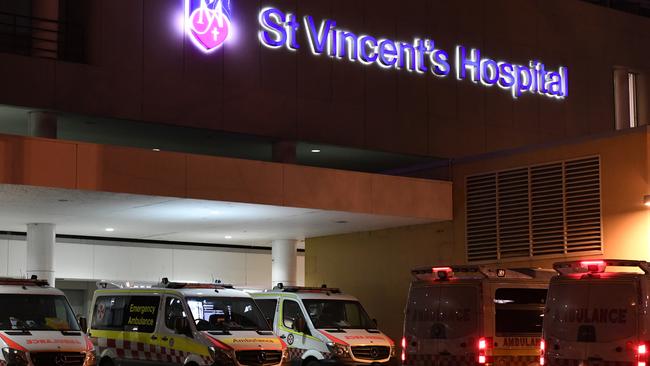
Then, they moved me into a 4-bed isolation ward (see my photo, above). When I say isolation ward, I mean that access to the ward was restricted, all the staff entering wore the full protective gear: face shield, mask, plastic garment over their normal clothing, etc. No body suits, though. By this time, I was feeling much better, and was starting to feel guilty that I was taking up a valuable bed. This feeling increased as I got to know my fellow ward-mates. Each of them had a significant underlying condition, plus COVID. One was one month into a heart transplant, one had had an emergency bypass and was pretty much out of it a lot of the time, another had a case of Staphylococcus aureus, and two of those also had diabetes. I only had COVID, without (I thought) any underlying conditions. This morning, I got a delivery of my luggage. The hotel had packed up the luggage from my room, and sent it to the hospital via an Uber. Dr. Jasper enthusiastically brought them in to me. Somewhere around this time, I asked what hospital I was in, as no one had told me when I was admitted. I was told that I was in St. Vincent's Hospital. I would hear conversations that the staff had with the other patients in the ward, where they would often try to ascertain the level of awareness of the patient by asking questions of them. One such question was "Tell me the months of the year, starting with December, and going backwards in time." -- Try it!Another one was "What hospital are you in?" -- I would not have been able to answer that during my first few days in this hospital! I contacted Neb to tell him what had happened to me, and discovered, to my chagrin, that I had apparently infected both Neb and Alice with COVID! He told me that Alice's symptoms were mild; Neb's were a little more like a bad cold, so he wasn't a happy camper. I apologized, but we all realized that there was nothing we could have done. My assigned doctor, Jasper (everyone went by first names -- nurses, cleaners, doctors, physiotherapists, etc.) told me that they had done a blood test on me, and it indicated that I might have a heart issue. They were concerned that COVID might have affected my heart, as it is known to do in some patients. As a result, he wanted to perform a test -- it turned out to be a CT Scan of the heart -- but couldn't until I tested negative for COVID. Presumably, I would contaminate the big very valuable CT scanner; clearly not a good thing. In all, I stayed in this 4-bed isolation ward from Tuesday, 28 March, until Monday, 3 April. During my stay, I wore a halter connected up to electrodes stuck over my chest. This way, they could monitor our simple vital signs, and we could see…

Out of Isolation!

  • Post author:

On Monday, April 3, they moved me out of the 4-bed isolation ward into a 4-bed regular ward, still in the Cardiac wing. Above, see an image of Darlinghurst at night; we had a very similar view from each of the two wards I'd been in. There, I had three ward-mates: A Chinese man who was completely laconic, and two white Australians, one an 80+ year old who was originally from England, and a guy who was about 58, and suffering from a cough that he kept repeating was a mystery to his doctor. The older man was due to be released, but he lived in a small rural place up north somewhere. He obsessed about how he was going to get to the airport. The younger man was worried about being released back home (somewhere in central Sydney) when he didn't know what was happening in his lungs, and how would he know when to consult his doctor again, after resting for some unspecified period. These two chewed the cud over their shared concerns, plus past naval diving experiences, endlessly repeating themselves. I was starting to think that I would be better off in the isolation ward where the others mostly slept. Soon, they came to get me for my procedure, a CT scan of my heart. It was done pretty quickly, and the results were available later that afternoon. A doctor (Sam, standing in for Jasper who was out that day), told me that the CT scan suggested that I had some blockages. That was the point when I had to stop obsessing about how I might rejoin the travel group in Auckland or in Fiji, and reoriented myself towards medical treatment. Sam said that they would be performing an angiogram the next day to investigate said blockages. I'd had an angiogram 21 years before, so I knew what to expect, except that they have improved the techniques since that time. They weren't messing about here! Angiogram the next day!

Angiogram!

  • Post author:

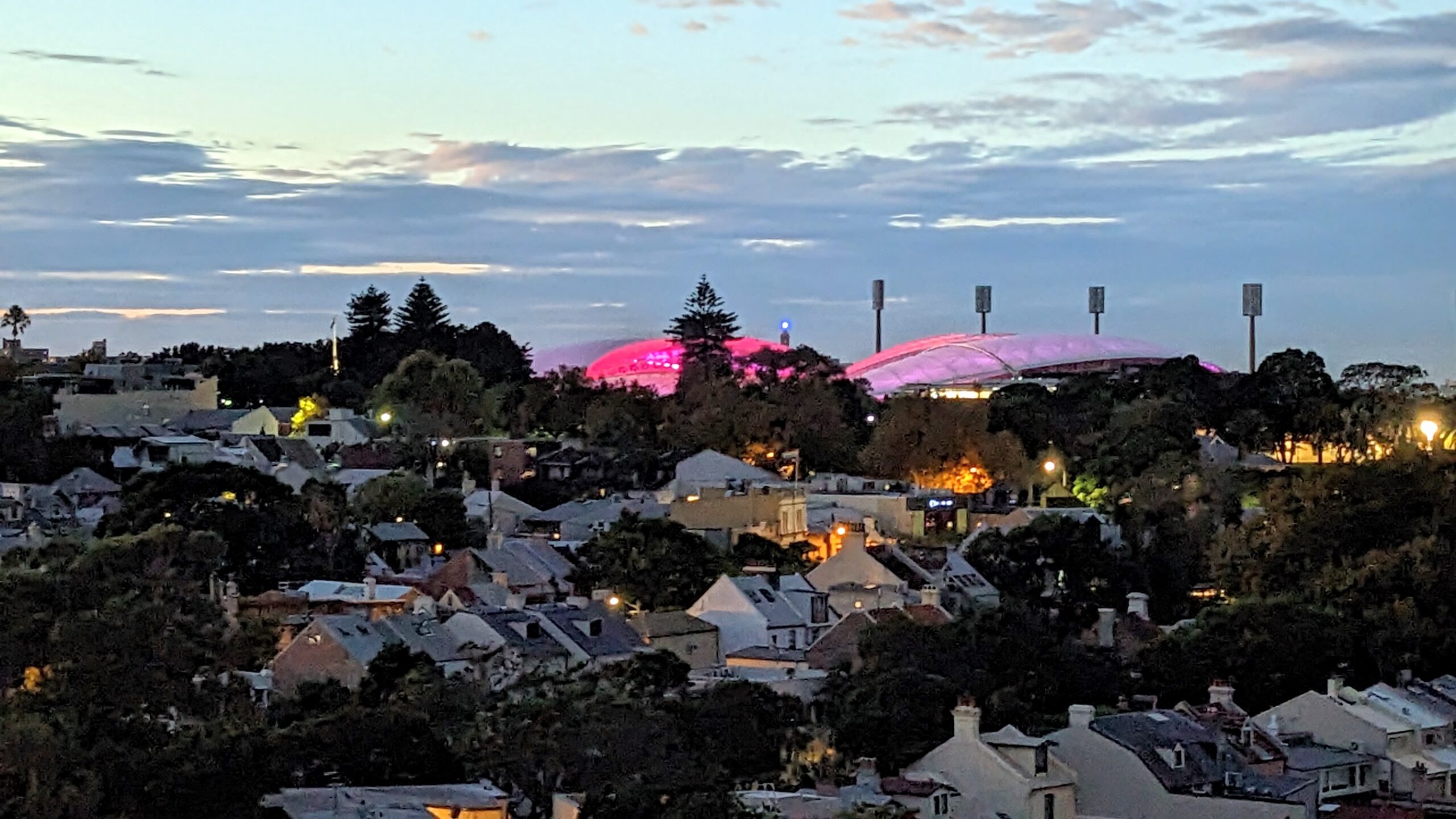
Today's image is a zoomed-in picture of what appears to be a major stadium not too far from the hospital. I believe it is the Allianz Stadium. That is somewhat ironic, since my travel insurance company is Allianz, with whom I'm struggling right now. The day of the angiogram arrived. But, I'd mentioned to my doctor that when I talked on my mobile to my lovely wife early in the morning, my time (much later in the previous day, her time), I felt like I was struggling for words more than usual. Without hesitation, my doctor ordered a CT scan of my brain. So, first, the CT scan -- I found out later, in my release medical records, that it indicated no problems. Then, the angiogram. I was awake the whole time. They went in through the radial artery in my wrist (much better than through the femoral artery as they'd done 21 years ago!), and I heard them conversing throughout. I did some conversing with them, but mostly I didn't want to distract them... They told me that they did not find any significant blockages, so they didn't have to insert any stents. They could tell that the existing stent from 21 years ago was still operating well. So, basically, a result as good I could have expected! YAY!