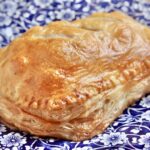
Forfar Bridie [Video]
A Forfar bridie is a popular Scottish creation that isn’t quite as famous as Cornish pasties, but if you ask me, it wins the prize for the tastier of the two!Have you ever heard of Forfar bridies? Unless you’re from Scotland, or possibly the UK, I’d place a bet that you haven’t, and that’s such a shame! Let’s change that, shall we?
Servings: 6
Equipment
- Metal cooling rack
Ingredients
- 1 lb lean beef mince or chopped, cut into ½" pieces (1 cm)
- 1 large onion finely chopped
- 2 oz butter or shredded suet
- ½ tsp dry mustard powder
- 1½ tsp sea salt
- ¾ tsp black pepper freshly ground
- 2 Tbsp beef stock
- 1 lb flaky pastry or puff pastry
(see here for a shortcrust recipe)
Instructions
- Oven Temperature: 450˚F (230˚C)
- Place all of the ingredients, except for the pastry, into a large bowl and mix well, preferably with your hands.
- Divide the pastry and meat mixture into six equal portions. Roll or cut (if using puff pastry) each piece of pastry into an oval or circle about six inches in diameter, and about quarter of an inch thick.
- Place some of the bridie mixture in the middle of the pastry.
- Wet the edge of the pastry with water, then fold over to seal.
- Seal the edge of the pastry with a fork.
- Place the finished bridies onto a baking sheet lined with a silicone sheet or piece of parchment paper. Cut a small slit or two in the top then brush with an egg white wash (slightly beat an egg white with half a teaspoon of water.)
- Bake in a pre-heated oven at 450˚F (230˚C) for 10 minutes. Lower the temperature to 350˚F (180˚C) and cook for another 35 to 40 minutes until they are golden brown. If they start to get too brown, cover with aluminum foil. Remove from the oven and if not eating them right away, place on a metal cooling rack.
- Serve hot, with a generous amount of HP Sauce. You can make it a full meal by adding hot, fluffy mashed potatoes and a green vegetable, like peas, (or Heinz beans).
Notes
Origin and History
- Invention: Created in the 1850s in the town of Forfar in Angus, Scotland.
- The Name: One story says they were named after Margaret (Maggie) Bridie, who sold them at the local market. Another story suggests they were originally baked for wedding feasts ("brides' meals"), which explains their traditional horseshoe shape meant to bring good luck.
- Hole Convention: Bakers poke holes in the top crust to let steam escape: one hole means plain meat, and two holes mean the filling contains onions.
Characteristics vs. Cornish Pasty
- Filling: Unlike a Cornish pasty, which includes root vegetables like potatoes and swede, a traditional bridie contains only minced or finely chopped steak, onions, and seasoning.
- Pastry: Traditionally made with a rich shortcrust pastry, though modern variations sometimes use flaky puff pastry.