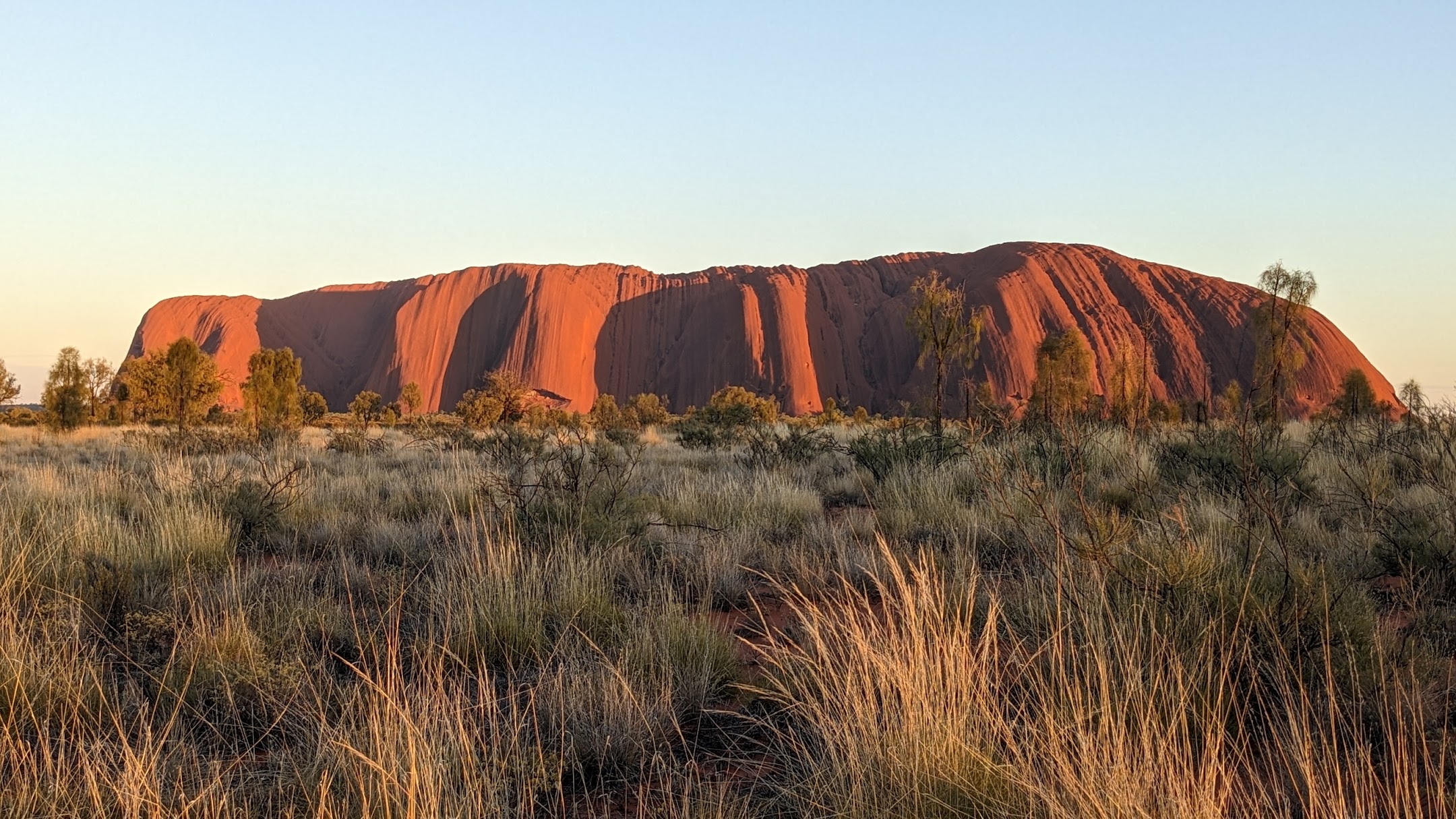
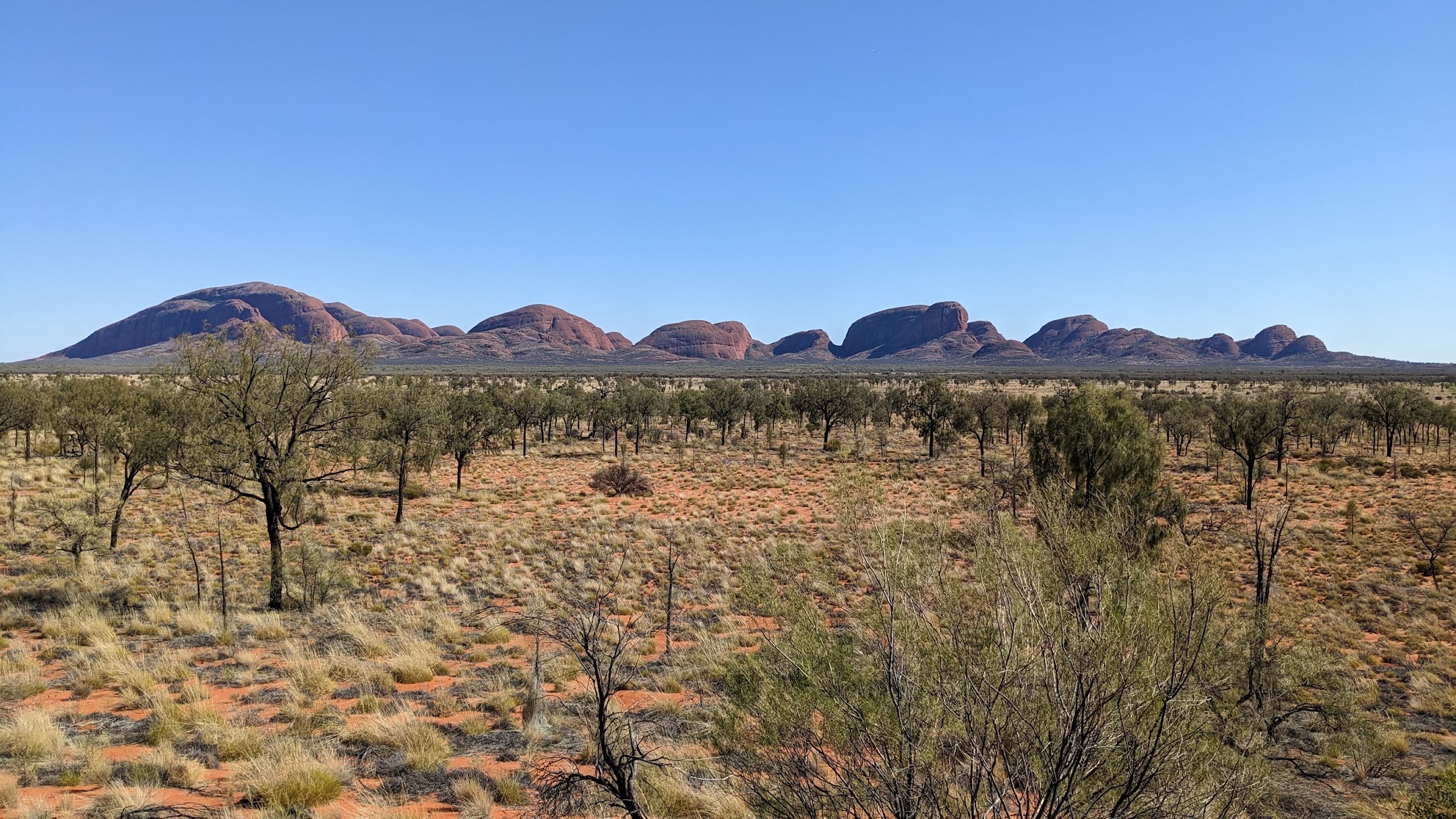
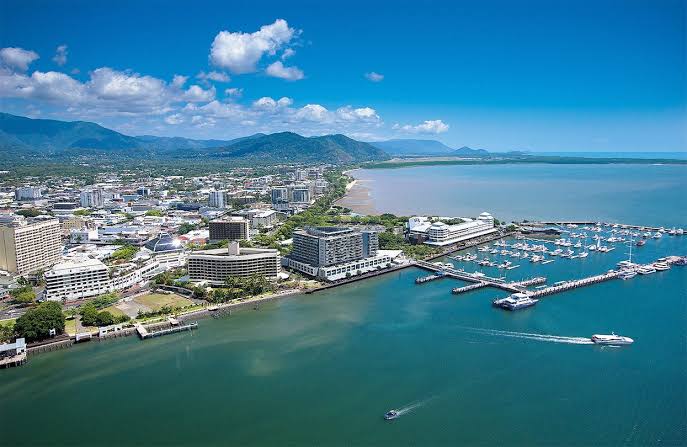
We checked out from our hotel, and the bus took us to Kata Tjuta. Uluru is the largest sandstone monolith in the world. But it has a much lesser known little sister, Kata Tjuta. Perhaps little sister is a misnomer. Uluru is 1,140 feet high, and about 6 miles in circumference. Kata Tjuta is a spectacular collection of 36 enormous domes, which, at its highest peak, is 650 feet higher than Uluru. Kata Tjuta is bigger, wider and taller than Uluru, but, somehow, Kata Tjuta is the neglected sister of Uluru. It is not well known, even to many Australians. So, we were fortunate that our tour takes in this impressive twin. By the way, Uluru is pronounced with the emphasis on the first and last syllables, like ‘kangaroo’. Kata Tjuta is about 45 minutes drive from Uluru, so the bus took us there, and we stopped for a short walk along a trail. The flies in this area are pretty bad, so we had to resort to head-nets. Aren’t they stylish? The trail takes you between two large domes, but unfortunately, unlike the trails at Uluru, it becomes rather rocky, and eventually you are walking on the actual rock of Kata Tjuta. While Uluru is made from a sedimentary rock called arkose sandstone, Kata Tjuta is made from a conglomerate — a mix of gravel, pebbles, and boulders, cemented together by sand and mud. This is the reason why Kata Tjuta has eroded away more quickly that Uluru. Sadly, this makes the trail more treacherous. While some people forged on to brave the rock, I decided that discretion was the better part of valor, and I returned to the bus. Some of our party were brave, others more sensible. The bus then returned us to the town square of Yulara (the location of the Sails in the Desert hotel), where we could pick our own lunch if we wished. But the temperature by then was starting to climb, so many did not bother to eat lunch there, including me. From there, the bus took us to the Uluru airport where we found quite a crush of people. There were only two check-in counters for Qantas, and only one was manned. After waiting in a long line, we eventually got our boarding passes, passed through security into the waiting area. It contained only a single gate, and probably for that reason there was no board telling us what flights were leaving, and from what gate. Even the gate did not announce what flight was boarding. It turned out that a lot of people were taking a flight to Sydney. Once they left, things got quite a bit less crowded, and soon we were winging our way to Cairns, a city in the north-east of Australia, known as the ‘gateway to the Great Barrier Reef’.