Weeknight Detroit Pizza
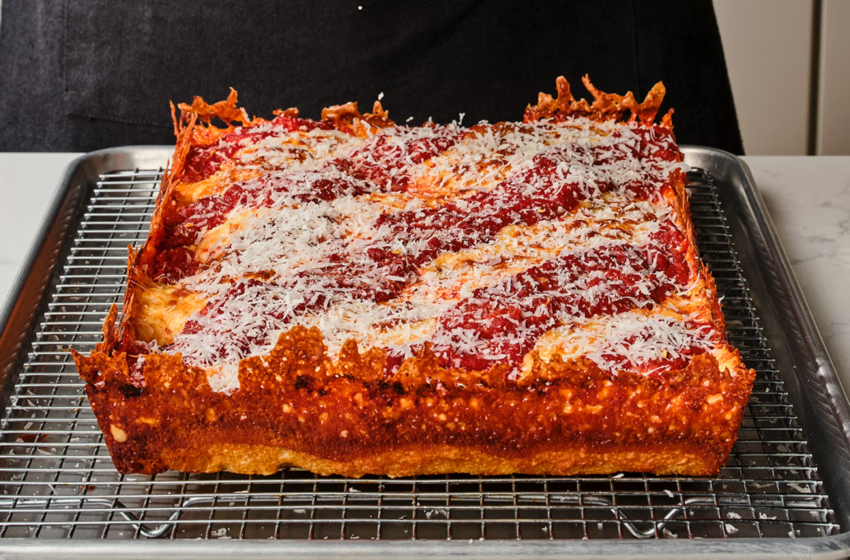
Known for its thick crust and crackly-crisp sides and bottom, Detroit Pizza also layers classic pizza toppings in reverse order: cheese first (brick cheese, to be totally traditional), then sauce.Detroit-style pizza was developed in 1946 at Buddy's Rendezvous, a former speakeasy owned by Gus and Anna Guerra located at the corner of Six Mile Road and Conant Street in Detroit. Historical accounts attribute the original Sicilian-style base either to Anna Guerra's mother's recipe for sfincione or a recipe from one of the restaurant's employees, a Sicilian woman named Connie Piccinato. The restaurant was later renamed Buddy's Pizza.
Servings: 1 13-inch x 9-inch pizza
Ingredients
Detroit-style dough
- 3 cups (360g) King Arthur Unbleached Bread Flour
- 1½ tsp (9g) table salt
- 1 tsp (3g) instant yeast
- 1 cup, plus 3 Tbsp (270g) water lukewarm (85°F to 90°F)
- 1 generous Tbsp (15g) extra-virgin olive oil
Sauce*
- 2 Tbsp (25g) extra-virgin olive oil
- 4 cloves garlic finely chopped
- 1 28-ounce can (794 grams) crushed tomatoes
- 1 Tbsp, plus 1 tsp (17g) granulated sugar
- 1 tsp table salt plus more to taste
For assembly
- 1 Tbsp (12g) extra-virgin olive oil, for the pan
- 3 cups (340g) brick cheese, shredded*
- 2 oz (60g) pepperoni or topping (optional)
- ½ cup (28g) Pecorino Romano finely grated
- red pepper flakes or Smoky Spicy Seasoning (optional)
Instructions
- To make the dough: In a large bowl, mix together the flour, salt, and yeast until well combined. Add the water and oil. Mix until thoroughly combined and homogeneous; don’t be afraid to stir vigorously to incorporate the dry ingredients. If the dough feels dry, add a scant tablespoon of water.
- Cover the dough and let it rest at room temperature for 15 minutes.
- Perform a bowl fold: Uncover the dough and use a wet hand to grab a section of dough from one side, lift it up, then press it down into the middle. Repeat, turning the bowl 90° (a quarter turn) after each stretch, three to six times total, until the dough won’t elongate easily. Turn the dough over, placing it seam-side down in the bowl.
- Cover and let it rest at room temperature for 15 minutes.
- Repeat the bowl fold. After the second bowl fold, the dough should be smoother and feel tighter. Cover the dough and allow it to rest at room temperature for 1 to 1½ hours, until it’s slightly puffy but not necessarily doubled in size. (The dough can be covered tightly and transferred to the refrigerator to rest for 8 to 24 hours after the second bowl fold, before the room temperature rest. Remove the dough from the refrigerator and allow it to come to room temperature for 1 hour before proceeding with the recipe.)
- To make the sauce: In a medium saucepan over medium heat, heat the oil until shimmering. Stir in the garlic and cook, stirring, until fragrant, about 30 seconds.
- Add the tomatoes, sugar, and salt and bring to a simmer. Simmer, stirring occasionally, for about 20 minutes, until the sauce has reduced significantly; you should have about 3 cups of sauce.
- Add additional salt to taste. Remove from the heat and let cool to room temperature. Use immediately or transfer to a lidded container and refrigerate for up to 5 days.
- To assemble and bake the pizza: Position a rack in the bottom third of the oven. Place a baking steel or stone on the rack and preheat the oven to 500°F. Grease a Detroit-style pizza pan or a 9" x 13" pan with the oil. Transfer the dough to the pan and turn once to coat in oil.
- Gently press and stretch the dough, using your fingertips to dimple the surface and encourage it to cover the entire pan. If the dough resists, cover it, let it rest for 30 minutes, and try again. Cover the dough and let it rest for 45 to 60 minutes, until slightly puffy (there should be some bubbles on the surface and edges, but the dough will not have doubled in size).
- Slide the pan onto the steel or stone and bake until the dough has set but has barely taken on any color, 10 to 12 minutes. Remove the pan from the oven.
- Starting at the edges of the pan, sprinkle a thick layer of brick cheese where the dough meets the pan edge; it will sizzle on contact with the pan. Once you’ve made this cheese moat, distribute the remaining cheese across the interior of the dough.
- Using about 1⅓ cups (roughly 300g) of sauce (reserve the remainder for another use), spoon thick stripes on the diagonal on top of the cheese layer. Distribute pepperoni on top, if desired.
- Return the pizza to the oven and bake until the edges are deeply colored and crisp, 12 to 14 minutes.
- Remove the pan from the oven and run a dull knife around the edge of the pan to loosen the pizza from the edge. With courage and conviction (and a large spatula to aid you), immediately slide the pizza out of the pan onto a wire rack (this will prevent it from steaming in the pan and losing its crisp crust). Let cool for a few minutes, then sprinkle with the pecorino and red pepper flakes, if using. Transfer to a cutting board and cut into squares.
Notes
*Brick cheese is a cheese originating in Wisconsin, United States, made in brick-shaped form due to (originally) using actual bricks to form the shape. The color ranges from pale yellow to white with an orange rind. When un-aged, this cheese has a sweet, mild flavor and is suitable for melting; after aging it has a stronger smell and a nuttier taste.
*You can replace the brick cheese with 1½ cups (170g) shredded low-moisture mozzarella (whole milk preferred), plus 1½ cups (170g) shredded cheddar, if desired.
Storage information
Store leftover Detroit pizza in the refrigerator for up to 5 days. Reheat in a 350°F oven until warm throughout, 10 to 15 minutes.Tips from our Bakers
Pizza sauce is thicker than tomato sauce, and it helps prevent the crust from becoming soggy. If you want to substitute store-bought tomato sauce, reduce it on the stovetop until it reaches a thick, not-watery consistency that can be dolloped, rather than poured or spread, onto your dough.