Thai Panang Curry [Video]
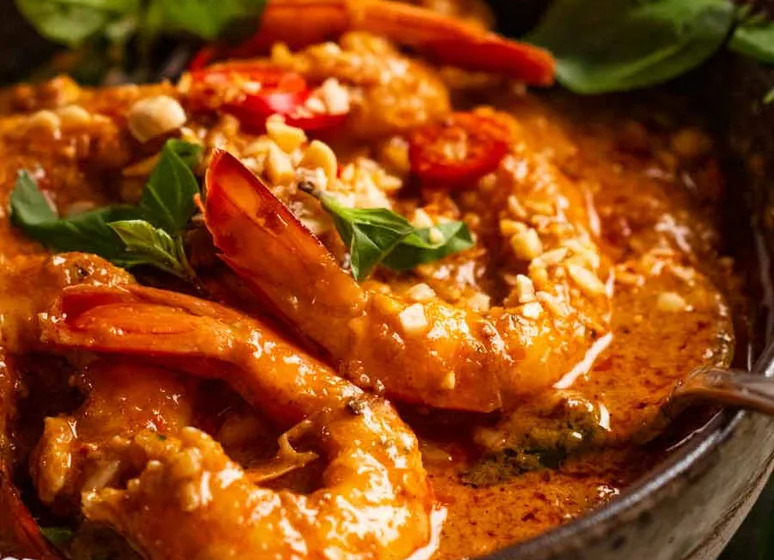
This is a real Panang Curry recipe for curry connoisseurs who adore authentic Thai food! It’s made using a homemade Panang Curry paste which is easy to make but will likely call for a trip to the Asian store. But if you truly want the best, it’s worth it. You can’t get good Panang curry in jars!Make this creamy coconut Panang curry with either prawns/shrimp or chicken. Both are great!
Servings: 4 to 5
Ingredients
Protein – choose ONE:
- 1.4 lb (700g) whole raw prawns/shrimp ie shell on, medium ~8cm / 3″long – Note 1
- 12 oz (350g) boneless, skinless chicken thighs cut into 7mm/ 1/3" slices
For prawn stock (shrimp):
- 1½ cups chicken stock/broth low-sodium (not fish/seafood – Note 2)
Curry paste:
- ⅔ cup dried Chinese chillies (not Thai!) (24 x 6cm/2.5" long, ½ cup (15g) once deseeded & chopped) – Note 3
- 3 Tbsp roasted peanuts unsalted
- 2 stems lemongrass finely grated (2 x 20cm/8″ lengths) – Note 4
- 2 eschalots roughly chopped (½ cup)
- 1 Tbsp galangal finely grated (~1.5cm / 0.6″ piece) – Note 5
- 5 cloves garlic finely minced
- 1½ Tbsp shrimp paste in bean oil Note 6
- ½ tsp each ground coriander
- ½ tsp ground cumin
- ½ tsp ground nutmeg
- 1 tbsp packed finely sliced kaffir lime leaves (~ 6 leaves) – Note 7
Curry:
- 3 Tbsp canola oil
- 1¼ cups coconut cream full-fat
- 3½ tsp white sugar
- 4½ tsp fish sauce
- ¼ tsp cooking/kosher salt
- 7 oz (200g) green beans trimmed, cut in half (~1½ cups)
- 12 leaves Thai basil Note 8
SERVING and GARNISHES
- Jasmin rice
- 2 Tbsp unsalted peanuts finely chopped
- Red cayenne peppers finely sliced (optional)
- Thai basil leaves 3 leaves per serving – Note 8
Instructions
Prawn stock:
- Simmer – Peel and devein prawns, reserving heads and shells. Bring chicken stock to a simmer in a small pot on high heat. Add prawn heads & shells, bring back to a simmer, then reduce to low heat. Simmer uncovered for 15 minutes, periodically crushing the heads lightly with a potato masher and skimming off any orange scum.
- Strain into a jug, discarding heads. You should have just over 300 ml (1 1/4 cups) of stock. Leave undisturbed to let the sediment settle (~ 5min+).
Curry paste:
- Cut chillies in half then tap / squeeze out seeds (use a chopstick if needed for stubborn seeds). Discard seeds (spicy!). Chop chilli.
- Soak dried chillis in 2 cups of boiling water for 30 minutes. Drain in a colander, reserve soaking liquid.
- Peanuts – Put peanuts in a tall jar that comfortably fits the head of a stick blender (or use a small blender). Cover the jar opening with your hand and pulse until finely ground.
- Blitz paste – Add drained chillis and remaining Curry Paste ingredients, along with 1/4 cup of the reserved chilli soaking liquid. Blend, scraping down the sides as you go, for about 30 seconds until smooth, using extra chilli water only if needed to help blend.
Cooking:
- Cook curry paste – Heat oil in a large deep frying pan over medium-low heat. Cook curry paste for 5 minutes, stirring constantly. The paste should be drier, darker, smelling aromatic and no longer raw.
- Sauce – Add 1 cup (250 ml) prawn stock, being careful to pour off just the clearer liquid and leaving the sediment behind. Stir in the coconut cream, sugar, fish sauce and salt. Mix in the green beans.
- Simmer for 2 minutes until the sauce thickens and the beans are half cooked.
- Add prawns, stir, then simmer for another 2 minutes until the prawns are cooked. Stir in the Thai basil leaves. The final taste should lean mostly savoury and sweet, and medium spiciness.
- Serve over jasmine rice garnished with chopped peanuts, chilli and more Thai basil leaves!
Notes
SPICE NOTE! This is an authentic Panang curry, so it’s spicy. Thai’s would class it as medium or “not so spicy”. For Westerners, it’s probably getting up towards hot. But not volcanic. Because the sauce relies on the chilli for colour and flavour, if you can’t handle spicy food, give this one a miss and make Thai Yellow Curry or Massaman Curry instead!
1. Proteins – I think juicy prawns go particularly well with panang curry, plus you get to re-purpose the heads to get free, bonus flavour into the stock which makes this really special. If using pre-peeled prawns, using 350g/12 oz and skip the stock making steps. Chicken – Recipe works perfectly with chicken too! Use 350g/12oz, thinly sliced. Skip the stock making steps, cook chicken as per recipe does with prawns. 2. Chicken stock? Yes! Store bought fish/seafood stock is really not good. But chicken stock is much better, and gets infused with prawn flavour from the prawn heads (which is where most of the prawn flavour is!). 3. Use Chinese dried chillies, not Thai or Indian! I know it sounds strange to tell you to avoid Thai dried chillies but they are SUPER spicy and don’t reduce in spiciness much when cooked. Same with some Indian ones are too (like kashmiri). My team and I did a lot of testing around chilli types for this curry re: excessive spiciness. Check label for country of origin, use Chinese chillies. Though the spiciness of Chinese chilli types and brands will vary, I found that the cooking process in this curry reduces the spiciness of the chillies so they end up being the same level of spiciness. Be brave! Try not to reduce the chilli too much because they are also a key flavouring for the sauce. If you can’t handle spicy food, I suggest skipping this recipe! Quantity – Dried chillies vary in length so the number you need will vary, from (say) 12 very large ones to 40 small ones for 2/3 cup when whole (20g, with seeds in). You need enough so you have 1/2 cup (15 g) chillies once chopped / deseeded. Be sure to deseed thoroughly – the seeds are where most of the spiciness is! 4. Lemongrass prep – cut the reedy end off, we’re only using the white and pale green part, around the bottom 20cm/8″. Trim root off, peel off reedy outer layer. Then grate using a microplane, discard stringy bits left. Sub: Fresh is best here but if you can’t get it, use 1 tablespoon of lemongrass paste instead. 5. Galangal – looks like ginger but is more citrusy and harder. It’s pretty tough so best to grate to ensure your curry paste is smooth. You can find it in Asian stores. Substitute: use the same amount of ginger + 1/4 tsp lime zest. 6. Shrimp paste in bean oil – I use Por Kwan Shrimp Paste in Bean Oil, the most popular one sold at Asian grocery stores here in Australia. Substitute with 1 1/2 tsp belacan dried shrimp paste, roughly chopped + 1 tsp oil + 1 tsp fish sauce + 1 garlic clove + 1 tsp miso, if you can – any type). Use in place of shrimp paste in recipe. 7. Kaffir lime leaves – Earthy lime flavour unlike anything else! Sold at Asian stores, Harris Farms & large grocery stores in Australia. Freezes 100% perfectly – used in Thai red curry, coconut rice, Thai meatballs. 8. Thai basil leaves – Fresh herb used in Thai cooking that tastes like Italian basil with a slight aniseed flavour. Sub with Italian basil. 9. Leftovers will keep for 3 days in the fridge or 3 months in the freezer. Keep basil separate – it degrades once stirred in.
1. Proteins – I think juicy prawns go particularly well with panang curry, plus you get to re-purpose the heads to get free, bonus flavour into the stock which makes this really special. If using pre-peeled prawns, using 350g/12 oz and skip the stock making steps. Chicken – Recipe works perfectly with chicken too! Use 350g/12oz, thinly sliced. Skip the stock making steps, cook chicken as per recipe does with prawns. 2. Chicken stock? Yes! Store bought fish/seafood stock is really not good. But chicken stock is much better, and gets infused with prawn flavour from the prawn heads (which is where most of the prawn flavour is!). 3. Use Chinese dried chillies, not Thai or Indian! I know it sounds strange to tell you to avoid Thai dried chillies but they are SUPER spicy and don’t reduce in spiciness much when cooked. Same with some Indian ones are too (like kashmiri). My team and I did a lot of testing around chilli types for this curry re: excessive spiciness. Check label for country of origin, use Chinese chillies. Though the spiciness of Chinese chilli types and brands will vary, I found that the cooking process in this curry reduces the spiciness of the chillies so they end up being the same level of spiciness. Be brave! Try not to reduce the chilli too much because they are also a key flavouring for the sauce. If you can’t handle spicy food, I suggest skipping this recipe! Quantity – Dried chillies vary in length so the number you need will vary, from (say) 12 very large ones to 40 small ones for 2/3 cup when whole (20g, with seeds in). You need enough so you have 1/2 cup (15 g) chillies once chopped / deseeded. Be sure to deseed thoroughly – the seeds are where most of the spiciness is! 4. Lemongrass prep – cut the reedy end off, we’re only using the white and pale green part, around the bottom 20cm/8″. Trim root off, peel off reedy outer layer. Then grate using a microplane, discard stringy bits left. Sub: Fresh is best here but if you can’t get it, use 1 tablespoon of lemongrass paste instead. 5. Galangal – looks like ginger but is more citrusy and harder. It’s pretty tough so best to grate to ensure your curry paste is smooth. You can find it in Asian stores. Substitute: use the same amount of ginger + 1/4 tsp lime zest. 6. Shrimp paste in bean oil – I use Por Kwan Shrimp Paste in Bean Oil, the most popular one sold at Asian grocery stores here in Australia. Substitute with 1 1/2 tsp belacan dried shrimp paste, roughly chopped + 1 tsp oil + 1 tsp fish sauce + 1 garlic clove + 1 tsp miso, if you can – any type). Use in place of shrimp paste in recipe. 7. Kaffir lime leaves – Earthy lime flavour unlike anything else! Sold at Asian stores, Harris Farms & large grocery stores in Australia. Freezes 100% perfectly – used in Thai red curry, coconut rice, Thai meatballs. 8. Thai basil leaves – Fresh herb used in Thai cooking that tastes like Italian basil with a slight aniseed flavour. Sub with Italian basil. 9. Leftovers will keep for 3 days in the fridge or 3 months in the freezer. Keep basil separate – it degrades once stirred in.